Yigit Korkmaz

I am a fourth-year PhD student in Computer Science at University of Southern California. I am lucky to be advised by Prof. Erdem Bıyık.

My Research interests lie in Robot Learning, Human-in-the-loop Learning, and Reinforcement Learning. Specifically, I am interested in developing methods that enable robots to continuously improve after deployment by efficiently learning from interaction and feedback in the real world. Toward this goal, I study how diverse forms of human feedback—including demonstrations, interventions, and preferences—can be leveraged for sample-efficient policy adaptation and fine-tuning. I am also interested in developing learning frameworks that make real-world reinforcement learning more practical and scalable. Ultimately, my goal is to enable general-purpose robots that can continually improve their capabilities while adapting to human goals, preferences, and changing environments.

Previously, I completed my M.S. at UC San Diego, where I worked with Prof. Xiaolong Wang. I have also spent summers interning at Toyota Research Institute, and [Google] Intrinsic.

Fun Fact: My name is pronounced as Yeet.


profile photo
Education

PhD. in Computer Science, University of Southern California 2023-present

Msc. in Electrical and Computer Engineering, UC San Diego 2021-2023

Bsc. in Electrical and Electronics Engineering (w/ Mechanical Engineering Minor), Bogazici University 2016-2021

Updates

Jul 2026 - Organizing Roadmap to Sample-Efficient Real-World Reinforcement Learning Workshop at CoRL 2026!
Apr 2026 - Robometer is accepted to RSS 2026!
Jan 2026 - ReCouPLe and LfCD-GRIP are accepted to ICLR 2026!
Sep 2025 - Q3C is accepted to NeurIPS 2025!
Jun 2025 - Organized Human-in-the-Loop Robot Learning Workshop at RSS 2025!
Jan 2025 - MILE is accepted to ICRA 2025!
Feb 2024 - CyberDemo is accepted to CVPR 2024!
Aug 2023 - Started my PhD in Computer Science at University of Southern California!

Publications
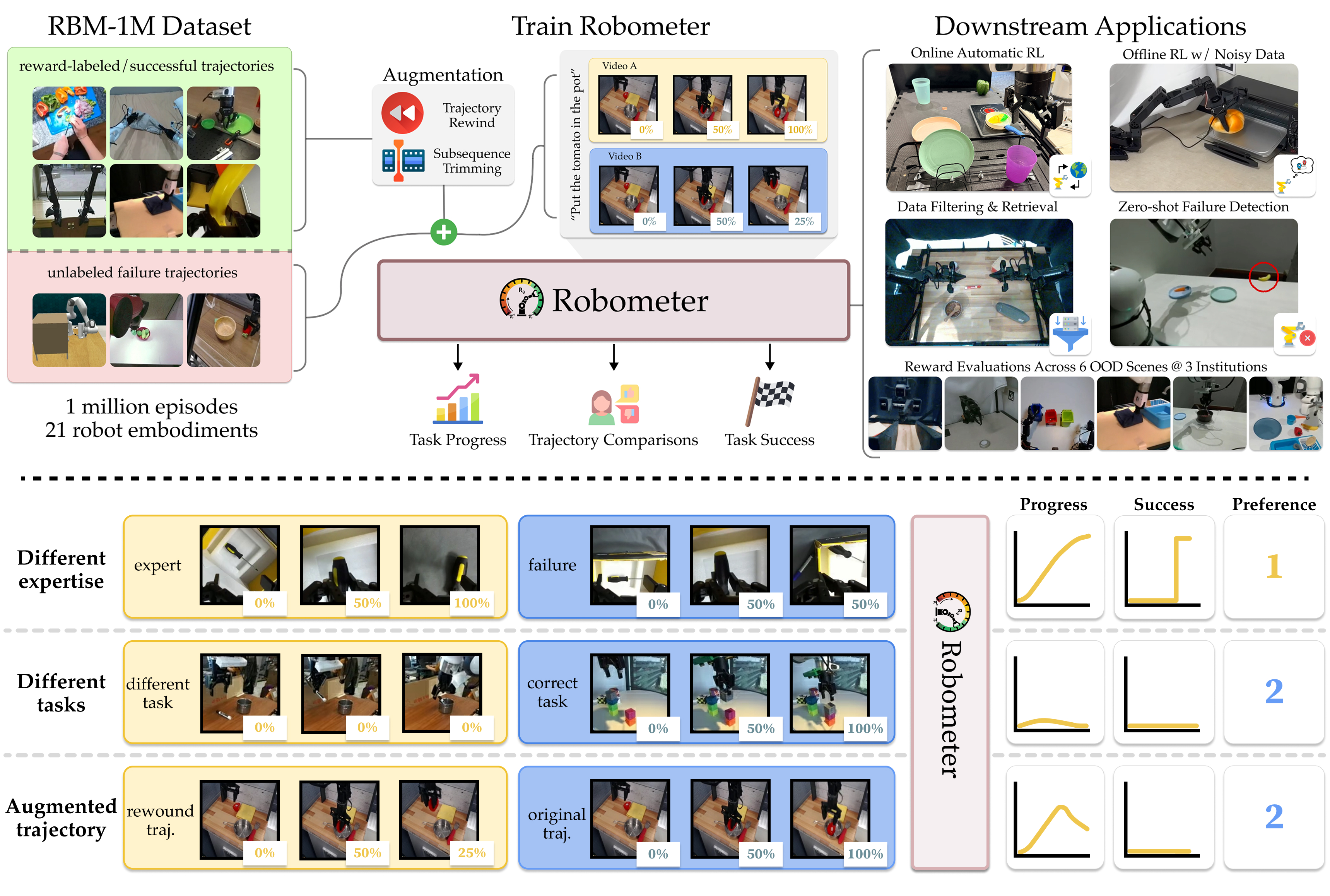
Robometer: Scaling General-Purpose Robotic Reward Models via Trajectory Comparisons
Anthony Liang*, Yigit Korkmaz*, Jiahui Zhang, Minyoung Hwang, Abrar Anwar, Sidhant Kaushik, Aditya Shah, Alex S. Huang, Luke Zettlemoyer, Dieter Fox, Yu Xiang, Anqi Li, Andreea Bobu, Abhishek Gupta, Stephen Tu†, Erdem Bıyık†, Jesse Zhang†
Robotics: Science and Systems (RSS) 2026
RL4IL Workshop @ ICRA 2026
[ Website, Paper, Code ]

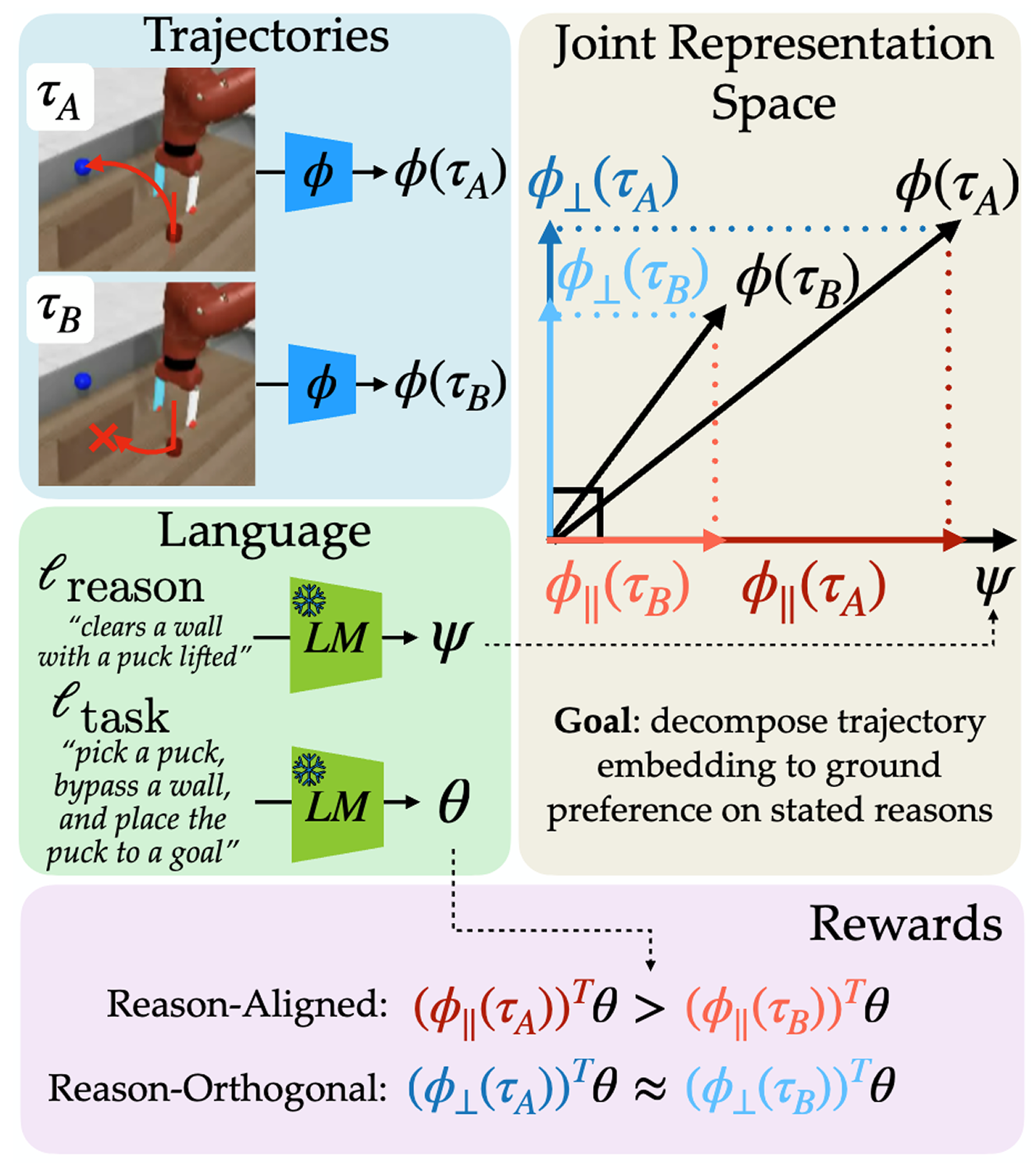
Causally Robust Reward Learning from Reason-Augmented Preference Feedback
Minjune Hwang, Yigit Korkmaz, Daniel Seita†, Erdem Bıyık†
International Conference on Learning Representations (ICLR) 2026
Human-in-the-Loop Robot Learning Workshop @ RSS 2025
[ Paper, Code ]

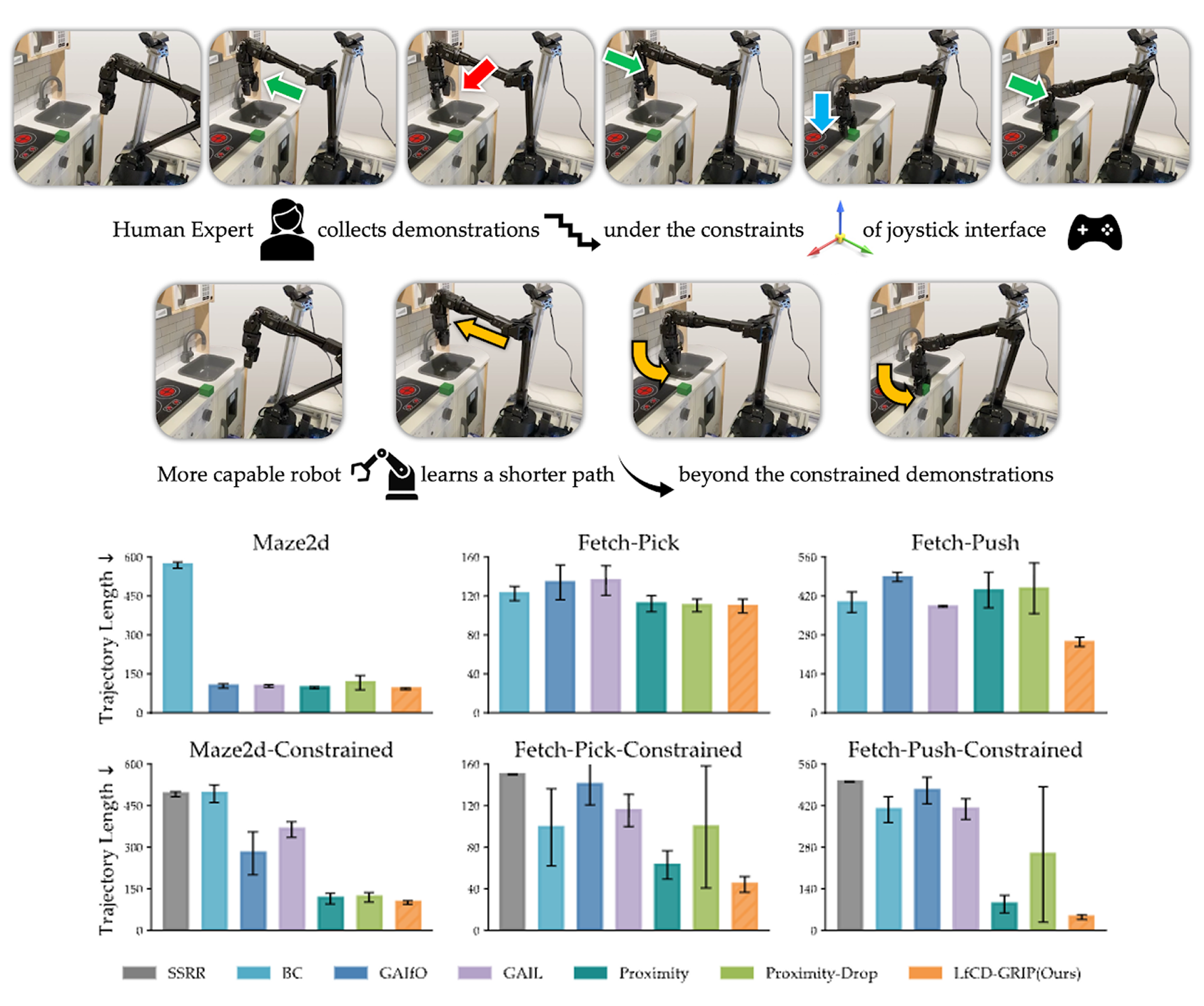
When a Robot is More Capable than a Human: Learning from Constrained Demonstrators
Xinhu Li, Ayush Jain, Zhaojing Yang, Yigit Korkmaz, Erdem Bıyık
International Conference on Learning Representations (ICLR) 2026
[ Website, Paper ]

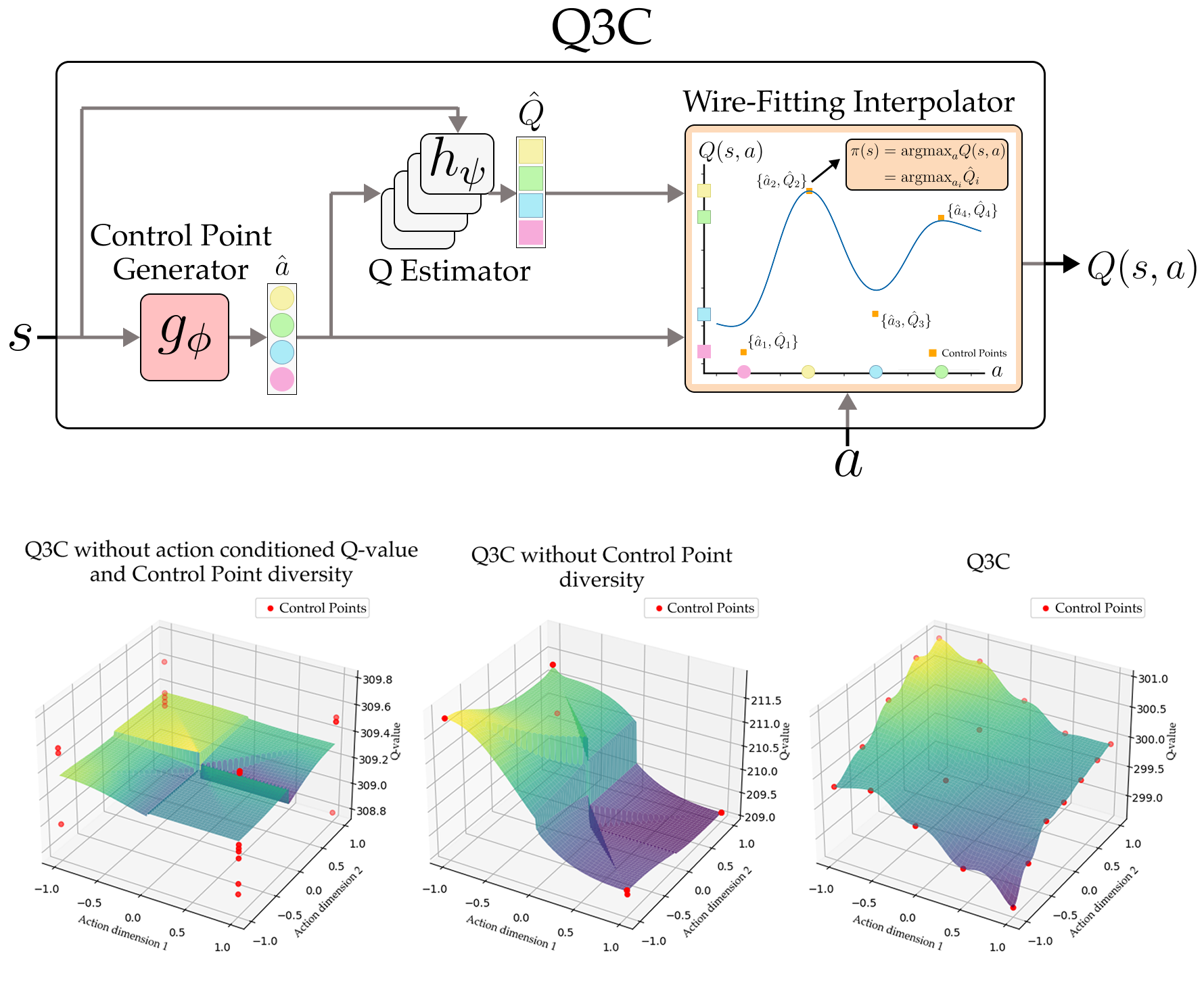
Actor-Free Continuous Control via Structurally Maximizable Q-Functions
Yigit Korkmaz*, Urvi Bhuwania*, Ayush Jain†, Erdem Bıyık†
Conference on Neural Information Processing Systems (NeurIPS) 2025
[ Paper, Code ]

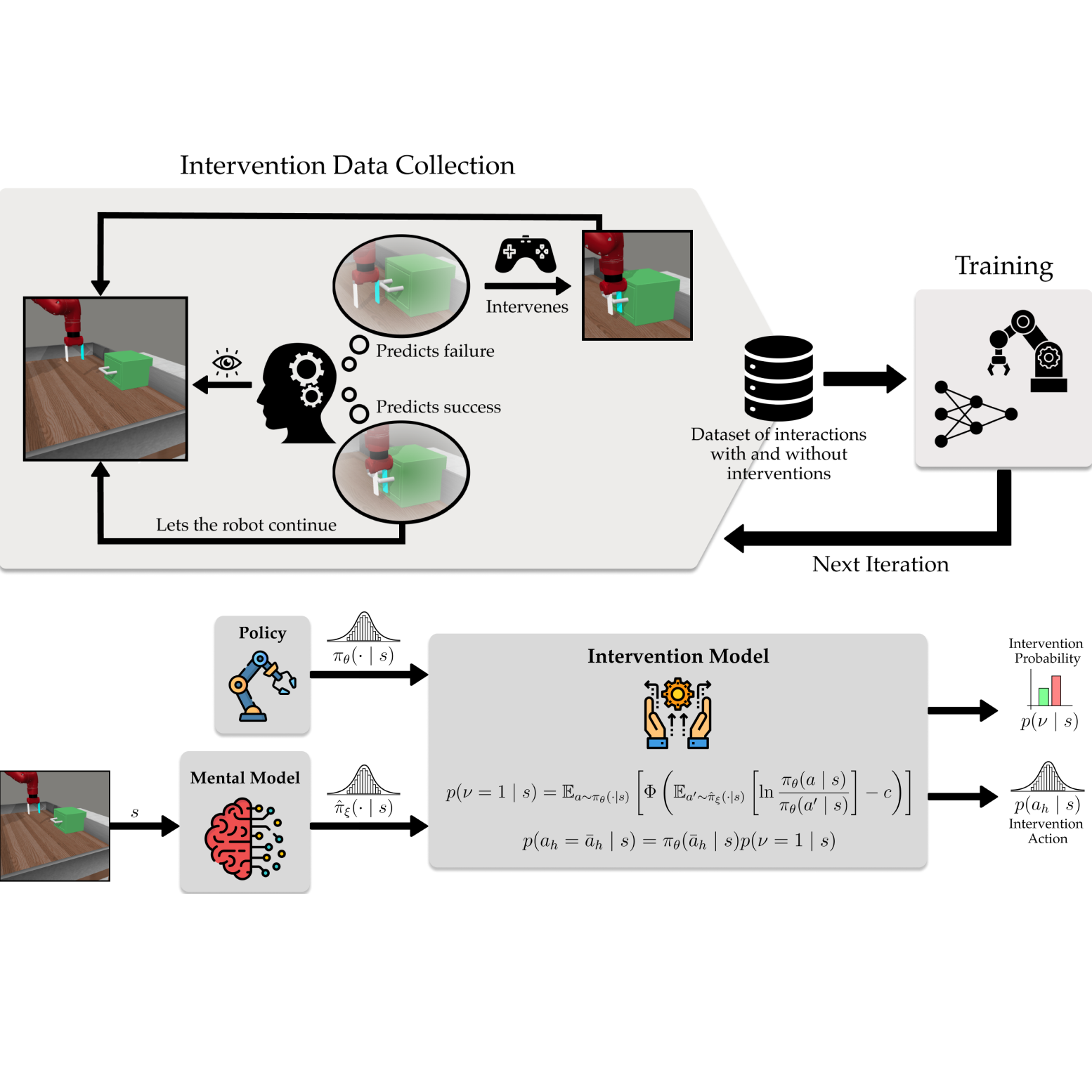
MILE: Model-based Intervention Learning
Yigit Korkmaz, Erdem Bıyık
International Conference on Robotics and Automation (ICRA) 2025
[ Website, Paper, Code ]

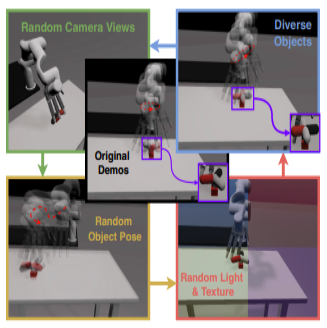
CyberDemo: Augmenting Simulated Human Demonstration for Real-World Dexterous Manipulation
Jun Wang*, Yuzhe Qin*, Kaiming Kuang, Yigit Korkmaz, Akhilan Gurumoorthy, Hao Su, Xiaolong Wang
Conference on Computer Vision and Pattern Recognition (CVPR) 2024
[ Website, Paper, Code ]

Selected Projects
Using Longformers for Argument Classification
Yigit Korkmaz
code

Transformer networks are highly utilized in Natural Language Processing(NLP) tasks. In this project, the use of Longformer, which is a transformer based network with advanced attention mechanism, in classifying argumentative elements of students’ writing will be discussed.

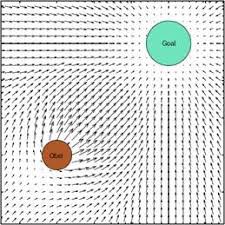
Motion Planning with Artificial Potential Fields
Yigit Korkmaz
code

In this project, APF(artificial potential fields), which a method used to formulate obstacle and goal interactions in a robot’s path, is implemented. With the assumption of a known map, obstacles act as repulsive forces where targets act as attractive ones. The code is written for ROS environment, and experimented on real robots.


Template is from Jon Barron's awesome website.